Regional council passes parts of water risk management plan, developers frustrated
Posted Jun 4, 2026 04:15:59 AM.
Last Updated Jun 4, 2026 12:39:47 PM.
Already, thousand of jobs and hundreds of millions in housing and construction investment have been lost while the Region of Waterloo navigates the water capacity issue.
Which is the sentiment coming from Waterloo Region’s development, construction and real estate community.
Reopen Waterloo Region is a newly formed coalition made up of the Waterloo Region Home Builders’ Association (WRHBA), Build Urban, the Grand Valley Construction Association (GVCA), Cornerstone Association of REALTORS®, and the Conestoga Heavy Construction Association.
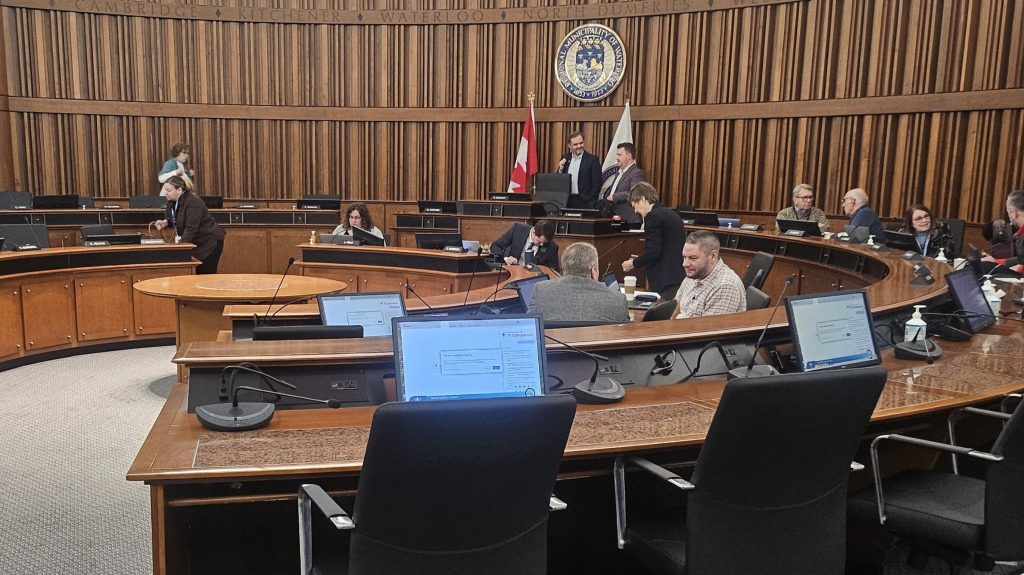
Representatives from each of those groups spoke to regional council at a special water capacity-focused meeting on Wednesday.
“For seven months, projects have stalled, financing has been lost, and investment confidence has eroded,” says Waterloo Region Home Builders’ Association President Matt Ninomiya. “Housing, industrial, commercial, and institutional development planning across this region has been effectively frozen. We need action that restores predictability and keeps Waterloo Region building.”
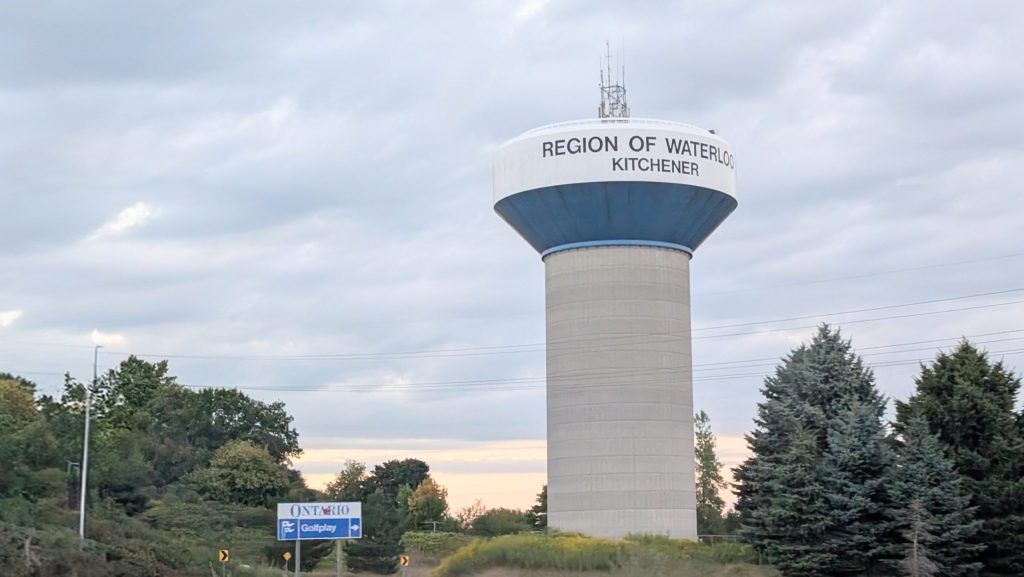
Development has been put on hold in Waterloo Region as regional officials look at ways to tackle the water capacity constraints.
When it comes to next steps, councillors are now looking to move forward with a staff-recommended plan on how to support development in a phased approach.
There were three options to choose from, all facing different levels of risk, with a goal of increasing water capacity over the next five years.
Scenario 1: Optimized planning to reliably supply water
Scenario 2: Deferral of planned shutdowns until Mannheim Water Treatment Plant (WTP) side stream treatment is fully operational in 2027
Scenario 3: Temporary extended increase in pumping of supply sources until Mannheim WTP side stream treatment is fully operational
Staff recommended moving forward with the second option, which had the lowest overall risk but the highest risk levels for failure of critical infrastructure, well rehabilitation, and loss of long-term growth and investment in Waterloo Region.
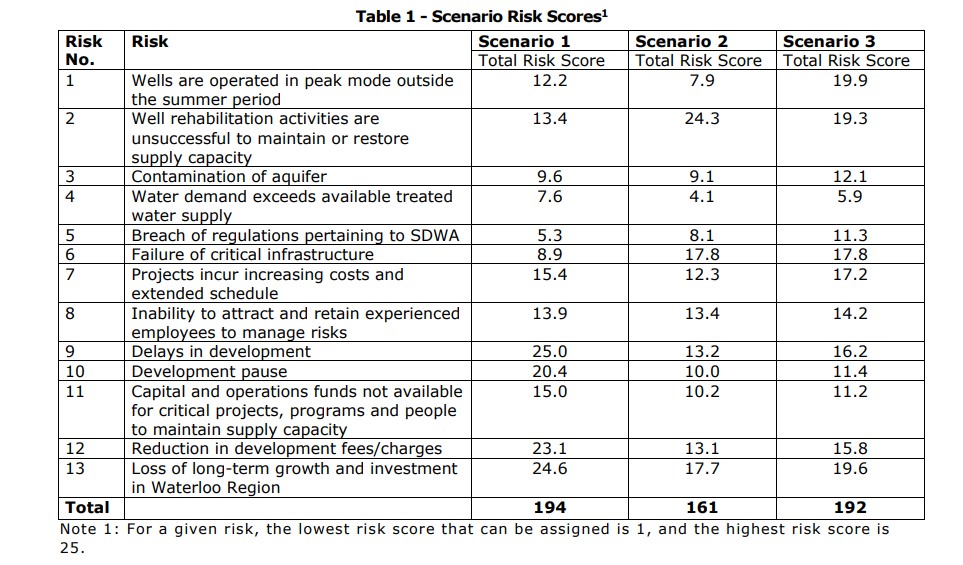
Staff estimate that by the fall, this September, they will be able to resume development regardless, and allocate additional water to municipalities.
The discussion that followed Wednesday was lengthy, with a new motion put forward by Councillor Michael Harris that in part asked to lower the framework maximum resiliency to 10 per cent rather than the staff-recommended 20 percent.
With amendments and adjustments made throughout the seven hour meeting, council eventually came back to square one and passed the staff-recommended interim risk management plan.
But the conversation didn’t end there.
Looking for more input on the lower resiliency rate, council deferred a decision on parts of Councillor Harris’ motion, to give a chance for the province to weigh in.
Between now and June 17, a provincial land facilitator will be asked to review, investigate and advise on a hybrid of the three scenarios.
Also deferred was a portion of the motion that would have allowed area municipalities to permit projects that have already received full planning approvals to move ahead with conditional building permits and phased construction.
“Water allocation decisions will directly shape whether homes get built, whether employers can expand, and whether projects can move forward,” said Chris Gerrits, Water Engineer for the Reopen Waterloo Region Coalition. “What’s needed is a consistent, region-wide framework that prioritizes growth, restores confidence, and gets projects moving again.”
Council comes back to the discussion in two weeks on June 17.
More on Water Capacity