updated
Judge quashes Alberta separation petition; Premier Smith says government will appeal
Posted May 13, 2026 04:22:03 PM.
Last Updated May 13, 2026 06:36:22 PM.
An Alberta judge threw out a separatist referendum petition Wednesday, saying Premier Danielle Smith’s government had a duty to consult with First Nations.
Justice Shaina Leonard also said Alberta’s chief electoral officer should never have issued the petition.
Speaking on Wednesday, Smith called Leonard’s decision “incorrect” and “anti-democratic,” and said her government intends to appeal it.
“Although, our government does support Alberta remaining in Canada, we think that today’s decision by the court will deny opportunity to over 300,000 Albertans to have their petition verified.”
“Our cabinet and caucus will be meeting in the next couple of days to discuss the full context and I’ll make some decisions after we’ve had a chance to talk it through.”
Lawyers for several First Nations argued last month that the province’s referendum process and its use by separatists are unconstitutional, as there’s no requirement for Indigenous consultation. They also said separation would violate treaty rights.
Government lawyers defended the process and pushed for the separatist petition to play out.
Leonard sided with the First Nations.
“As a matter of logic and common sense, there can be no doubt that Alberta’s secession from Canada will have an impact on Treaties 7 and 8,” the judge wrote.
She said a bill that Smith’s government passed in December to amend the citizen-initiated referendum process “put in motion a series of required steps that engaged the duty to consult.”
“No consultation occurred. Alberta breached its duty to consult with the applicants,” the judge said.
The bill, tabled in December, removed the requirement that proposed referendum questions be constitutional. It removed the ability of the chief electoral officer to refer proposals to the courts for review.
And it allowed applicants to reapply.
When the separatist group Stay Free Alberta first applied last summer for a petition, its question was referred to a judge for review.
That judge, in a decision the day after the bill was tabled, ruled that the group’s question was unconstitutional. The group reapplied and their petition was issued in January.
Leonard said the separatists shouldn’t have been allowed to reapply, because the chief electoral officer denied their first proposal Dec. 8. The bill came into force three days later.
“The first proposal was not pending when the amendments came into force. It had been rejected and had come to an end,” the judge said.
Stay Free Alberta plans to appeal
Jeff Rath, a lawyer for Stay Free Alberta, said in a statement that the group plans to appeal.
“We disagree fundamentally with the decision which appears on its face to violate the principles of natural justice and contain numerous errors of law,” Rath said.
Rath added that Smith could simply call a referendum on separation, as “301,620 Albertans expect her to do so.”
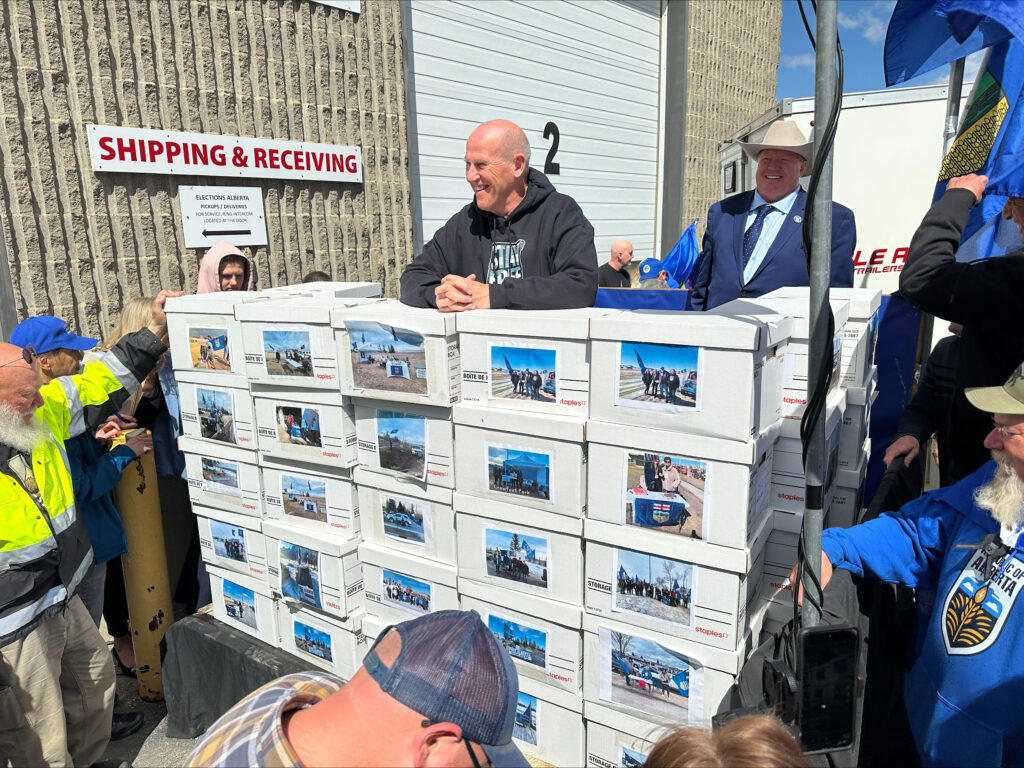
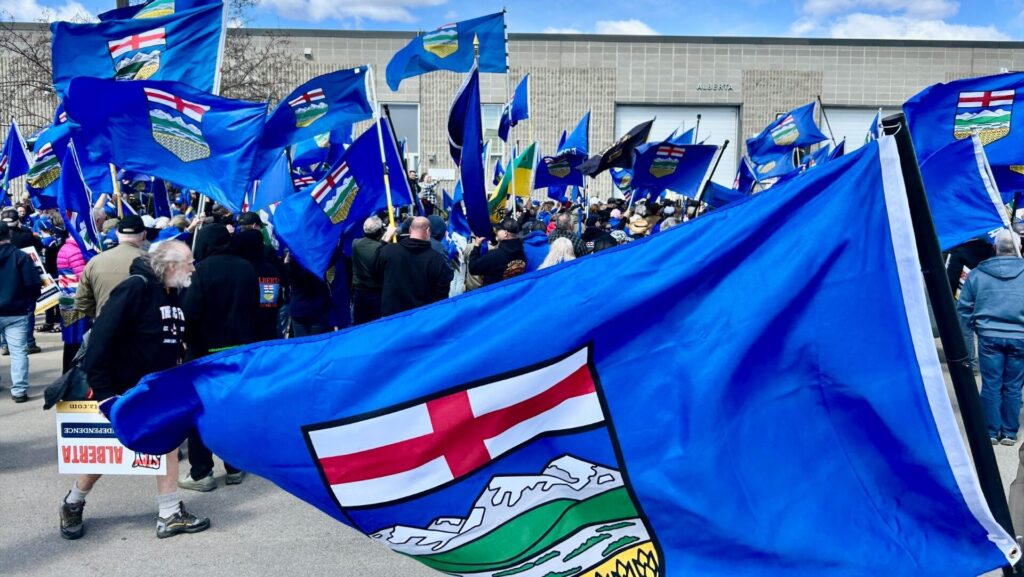
Stay Free Alberta handed in its petition last week and boasted that it had nearly 302,000 names — well above its 178,000 requirement.
Smith has said if the petition got enough signatures, the group’s question would be put on a ballot this fall.
‘This petition is dead. This referendum is dead’
Following Smith’s remarks Wednesday, Alberta NDP Leader Naheed Nenshi said the premier needs to move on.
“The Premier says that she’s exploring other ideas. Here’s an idea, Premier: call off the referendum and put this to bed,” Nenshi wrote in a statement. “This petition is dead. This referendum is dead. For the premier to spend taxpayer time and money to resurrect it, would prove what we’ve always known: she’s a separatist.
“Accept the court’s decision. Nobody is above the law – and certainly not this Premier. Albertans are proud Canadians and want nothing more than to move on from this and focus on the things that really matter.”
Last month, Leonard ordered a pause on the signature verification process for the petition while she considered the legal challenge.
Athabasca Chipewyan First Nation and the Blackfoot Confederacy, which represents the Siksika, Kainai and Piikani First Nations, launched the case.
Neil Dobson, a lawyer for the province, argued in court that it was premature to consult with Indigenous leaders about the petition, because the government wasn’t yet taking action on Alberta leaving Canada.
“The collection of signatures and the ability to put forward the petition in the first place is really the commencement of that political discussion,” Dobson said.
He said that if a referendum passed and the province took steps to follow through, then a duty to consult would be triggered.
During the hearing, the judge questioned why consultation wasn’t done sooner, since First Nations have been sounding the alarm over the prospect of separation for more than a year.
Dobson said it was a policy choice and that the government was within its rights to wait.
Smith and some of her cabinet ministers have said they support a sovereign Alberta within a united Canada but also believe in direct democracy.
The premier has outlined nine questions dealing with immigration and constitutional changes for an Oct. 19 referendum, and a separation question going on the ballot was up in the air.
A pro-federalist petition was earlier verified.
Thomas Lukaszuk, a former Alberta deputy premier, spearheaded the “Forever Canadian” petition, which had just over 400,000 signatures verified by election officials in December.