Province moving ahead with conservation authority amalgamation
Posted Mar 11, 2026 04:47:08 PM.
Last Updated Mar 13, 2026 04:05:23 PM.
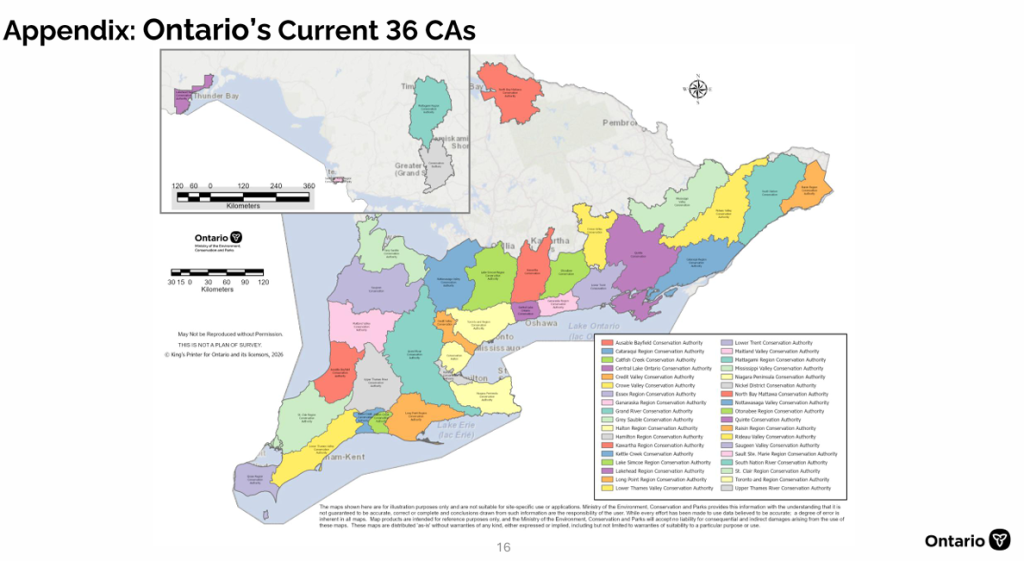
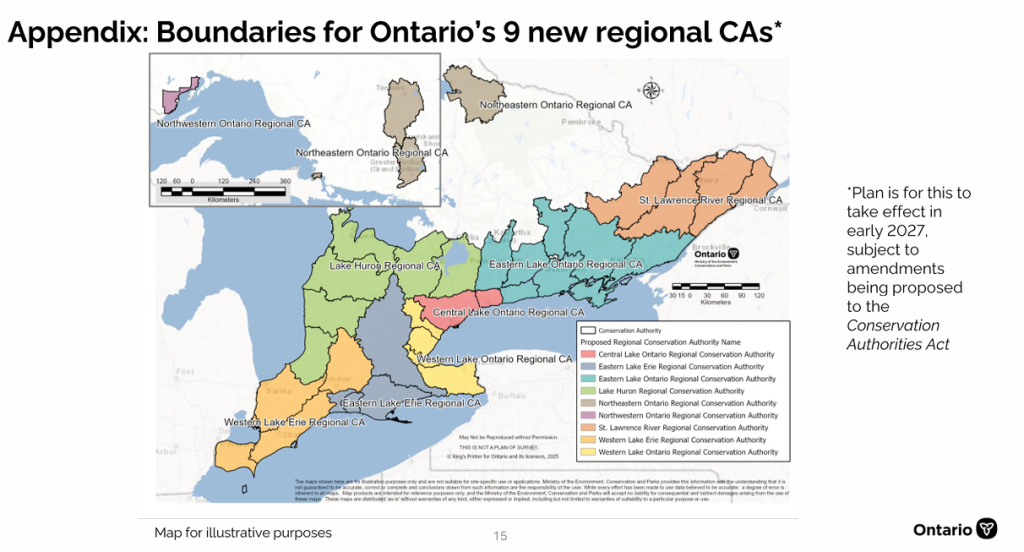
The Ontario government announced it will be moving ahead with a plan to amalgamate the province’s conservation authorities (CAs) from 36 down to nine.
The original plan, proposed in October, would have seen seven consolidated CAs created, but pressure from the existing authorities, municipalities and concerned residents forced the province to revise that plan from seven to nine.
Todd McCarthy, Minister of the Environment, Conservation and Parks, told 570 NewsRadio this move is happening because, in the government’s opinion, CA’s have been operating under a fragmented system that has produced inconsistent results when it comes to flood prevention and customer service.
“We want to empower Ontario’s CAs to deliver fast, more efficient and more cost-effective outcomes for the communities they serve. And, at the same time, fulfill their core mandate of flood prevention, watershed management and protecting people and property from natural hazards,” said McCarthy. He added, “So we want to make sure they are equally resourced with modern technology and mapping.”
To make that happen, the province has committed $3 million dollars to the Ontario Provincial Conservation Agency (OPCA), to help CAs through the transition. That’s on top of the OPCA’s $20 million operating budget.
Kevin Thomason is with the Grand River Environmental Network. He told 570 NewsRadio he’s not buying the notion that this is being done to improve CA’s.
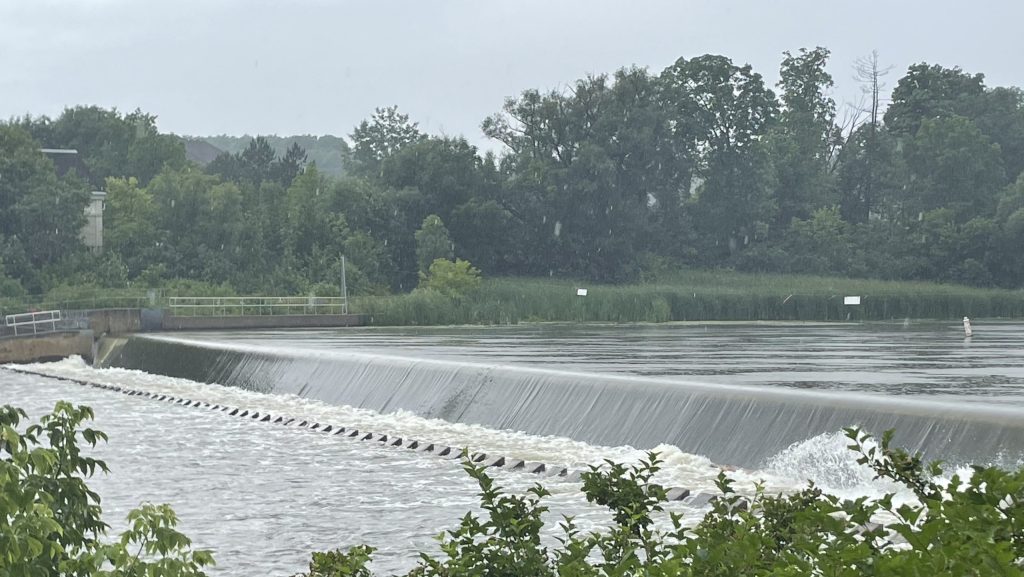
“We’re in an era of increasing climate change with more flooding risks, heck, look right now, I’m sure the lead item on the news the last few days has been the flooding in New Hamburg and Ayr and so many other parts of our region and our province,” said Thomason.
He went on to say he believes it’s all about development, “And yet, here’s the government, in a desperation to build 1.5 million homes anywhere at any cost, trying to remove all the, what they claim is red tape, but all the guardrails and precautions as possible and open everything up.”
One of the issues the province is looking to tackle, according to McCarthy, is the slow turnaround for permitting. The province’s press release on Tuesday mentioned the intention to modernize the permitting process.
“When you have inconsistent, unpredictable outcomes, it doesn’t work for homeowners when it comes to basic renovations. It doesn’t work for farmers when they seek permits. It doesn’t work for builders of new communities. It doesn’t work for municipalities,” said McCarthy.
Thomason believes these changes are being made, at least partially, to appease developers who oppose any sort of regulation.
“The CAs have been a stickler because they’ve done such a great job of managing our watershed, watching our floodplains, making sure people are building where they should be and frankly not in the ecological areas, the floodplains or wetlands where they shouldn’t be.”
Thomason said there has been no shortage of challenges to CAs preventing certain developments over the years, “Why anyone would want to build on a floodplain, heaven only knows. On the other hand, if there is a dollar to be made, don’t underestimate that someone is going to try it. It’s very concerning.”
Impact to GRCA
The province has said the new CAs will be brought into effect early next year.
When they do, the GRCA will be rolled into the Eastern Lake Erie Conservation Authority (ELECA), along with the Otter Creek CA, Kettle Creek CA, and the Long Point CA. The ELECA would cover an area spanning from Dundalk in the north to Dunnville on the Lake Erie shore. It will continue west to encompass the St. Thomas area, skirting under the London area, which will be incorporated in the Western Lake Erie CA.
In a statement to 570 NewsRadio, GRCA Chair, John Challinor II said:
“The Ontario government has announced the next step in its plan to reform the province’s conservation authority system and its intention to create nine regional conservation authorities. Based on the extensive feedback received, the Province has amended the boundaries that were proposed in the ERO posting in 2025. Under the revised plan released on March 10, the GRCA will be part of the Eastern Lake Erie Region Conservation Authority. We appreciate that the Province considered the GRCA Board’s feedback in proposing a more balanced, right sized model that includes the GRCA.
The government also announced plans to introduce further amendments to the Conservation Authorities Act that, if passed, will guide the consolidation process. The GRCA will continue to review provincial information as it becomes available, and we will provide updates on our website. A preliminary report will be included in the March 27, 2026, GRCA Board Meeting agenda.
The GRCA Board supports the government’s goals of modernizing the conservation authority system by enhancing consistency, efficiency, and technical capacity across Ontario’s conservation authority system. We remain committed to working collaboratively with the Province, the Ontario Provincial Conservation Agency, and our municipal partners, while maintaining our focus to protect people and property from floods and other natural hazards, improve the health of the Grand River watershed, and connect people with the environment.”