Speed cameras in Royal City issued 32K tickets, $3.6M in fines: report
Posted Feb 23, 2026 10:24:33 AM.
Last Updated Feb 23, 2026 11:09:50 AM.
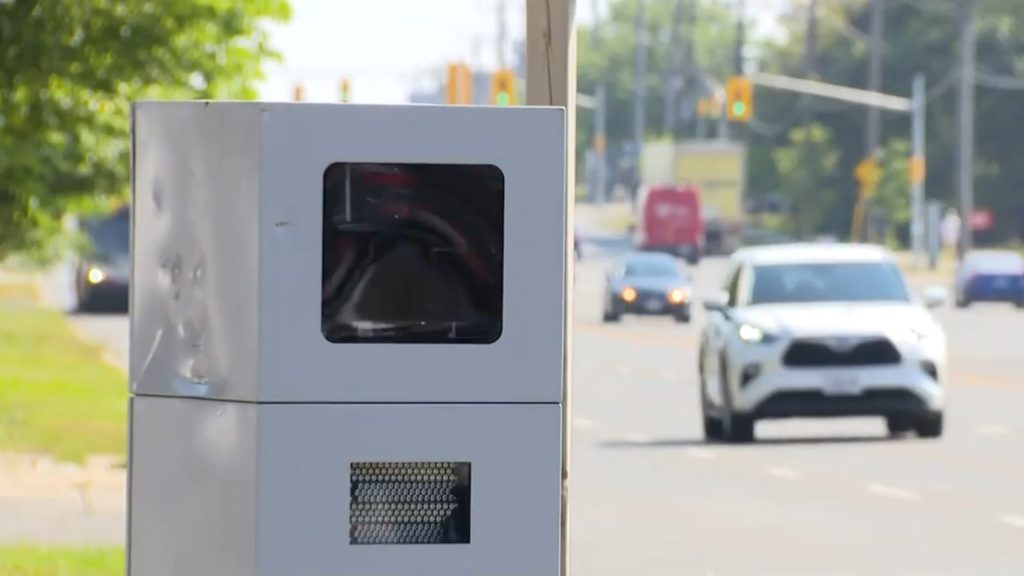
It’s now been over three months since speed cameras went dark across Ontario, but information is still coming to light on their impact.
The City of Guelph says it collected $3.6 million from speed camera tickets before they were shut off.
The report, which was released by city staff, showed that $3,561,127.50 in fines were issued from a total of 32,557 tickets, all over a 28-month operation of its automated speed enforcement (ASE) program.
It stated that, as of now, there’s still $470,000 that has yet to be collected.
“During the program, automated speed enforcement cameras operated in 33 unique elementary school sites,” the report stated. “At program launch, there was a 32 per cent posted speed compliance, which improved to 80 per cent when the program stopped operating where speed cameras were present.”
The report notes that once cameras revisited locations for a second time, average speeds were lowered by approximately 17 per cent.
“At program launch, approximately 40 percent of drivers exceeded the speed limit by at least 10 km/h,” said the report. “As of July 2025, that number had dropped to 15 per cent. These measures demonstrate the program was an effective deterrent and significantly improved speed compliance, which is an important aspect of road safety.”
While the report went into the effectiveness of the ASE program, it also detailed where exactly those fines and the money collected went.
Even though $3.6 million was issued in fines, the city said it only added $310,412 to the city’s wallet, or around 8.7 per cent. The report stated that much of the remainder went to various areas related to the program itself.
The revenue is said to have been used for expenses, including:
- Daily operating costs to the third-party ASE vendor
- Joint Processing Centre to review images and issue violations
- Fees to the Province for license plate ownership information
- Guelph Provincial Offences Court staff and administrative costs
- Cost-sharing Provincial Offences Court component to the County of Wellington
- Each violation included a Provincial Victim Fine Surcharge, which was returned to the Province
“After the above-mentioned court’s expenses were accounted for, the excess revenues of $310,412 were transferred to the Transportation Reserve Fund,” the report said. “This fund also includes a separate excess revenue transfer from the red light camera program.”
On top of the fines that the city collected, the City of Guelph also received an initial grant funding allocation of $676,904 from the province’s Road Safety Initiatives Fund, with the hopes that it would be used to “implement physical traffic calming measures where speed cameras were present.” The Royal City is expected to use that money by Mar. 31, 2028.
The province has already begun issuing a second funding opportunity through that same program, with city staff saying it is in the process of applying for the expanded funding.
Previously, the Region of Waterloo said it had recorded two million instances of speeding, handing out more than 55,000 tickets since it was brought online until September 2025.
570 NewsRadio has sent a request to the Region of Waterloo about similar data it collected for its speed camera program.