Toronto Pearson airport unveils new $1.5B revitalization plan for Terminals 1, 3
Posted Jul 21, 2026 09:54:50 AM.
Last Updated Jul 22, 2026 12:59:16 PM.
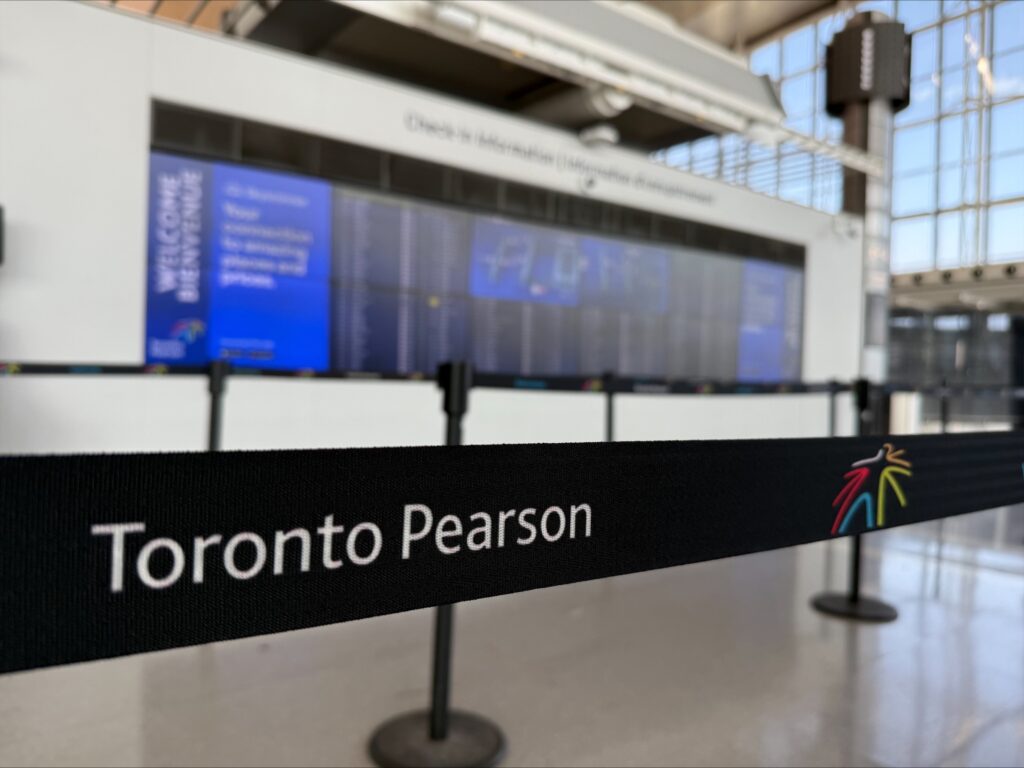
Toronto Pearson International Airport officials have unveiled a $1.5-billion revitalization plan for Terminals 1 and 3 to modernize the airport and make the facilities easier to navigate.
Billed as the largest infrastructure program in the history of airports in Canada, the terminal renewal program falls under the 10-year Pearson LIFT (long-term investments in facilities and terminals) plan.
“Time is of the essence to build capacity as demand continues to grow,” Deborah Flint, president and CEO of Toronto Pearson International Airport, told dignitaries during an event on Tuesday.
“We know experiences are new forms of customer expectations through their airport journeys, and we’ll provide new ones for all travellers.”
In 2025, airport staff said approximately 47 million passengers moved through the terminals to and from more than 200 destinations across the world. By the mid-2030s, they said it’s expected to jump to 65 million. The area in and around Toronto Pearson airport is one of the busiest employment hubs in Canada and by the mid-2030s there should be approximately 68,000 workers
To address that growth, officials said the program involving Terminals 1 and 3 aims to speed up and streamline the airport experience through investments in gates, check-in areas, passenger processing areas, advanced security screening, customs and immigration facilities, better signage, updated dining options, and thousands of new interior lights. However, information on specific changes wasn’t publicly provided.
“There’s a lot of work that’s going to go on behind the walls, underneath the floors, and inside operating systems that many passengers won’t ever see,” Flint said.
“We know that mega-project success can be elusive, and it requires preparation, coordination and trust.”
Jim Anderson, an architect and a partner with Dialog — a design company partnering with the firm Norr, said the designs for all the upgrades will be passenger-focused and will “look at what it means to be arriving in Toronto.”
“We’re going to look to make the space brighter, more spacious, organized in a way that’s intuitive, use intuitive wayfinding so that people can find their way through and really have a good experience,” he told reporters.
“Obviously it’s signage, but we’ll also be looking for electronic versions of wayfinding, but also just in the materials and the way the space is designed.”
“Our experience here at Pearson has given us some lessons learned in terms of how best to interact with the building. We’ve got over 30 years of doing this, so we know our way around the place and I think we’ll be drawing on many of those lessons in terms of affecting a change here at the airport,” Mark Boone, a vice president with Norr, added.
Construction will take place in stages so that the airport can continue to operate safely and minimize disruption for passengers.
“(The) biggest logistical challenge is actually working in a live environment. It’s very dynamic, and we deal with ongoing live activities not only from a passenger experience standpoint, but also from an aviation partner and just the businesses that operate within the airport itself,” Monique Buckberger, a vice president with PCL Construction Canada — one of the companies awarded a building contract, told reporters.
Buckberger nor airport staff provided estimated timeframes for building and completing the various enhanced spaces and infrastructure.
Terminal 3 opened to the public in 1991 and Terminal 1 opened in 2004.
News of the terminal enhancements came after airport officials unveiled a $3-billion suite of measures in May focused on increasing air traffic and tightening on-time performance with improvements ranging from repaved runways to “modernized retail” and possible terminal expansions.
Specific measures as part of that large investment included an expanded airfield, a new “high-speed taxiway,” upgrading 20,000 airfield lights as well as 30 kilometres of baggage infrastructure.
With files from Dilshad Burman