‘Serious ramifications’: Cambridge reins in proposed hidden disability program

Posted Mar 5, 2026 11:47:24 AM.
Last Updated Mar 5, 2026 11:47:29 AM.
After a tense debate at the Cambridge horseshoe, a new program centred around sunflower-themed lanyards and disability awareness has been pulled back by city councillors.
The motion brought forward by Councillor Corey Kimpson would have integrated a new Hidden Disabilities Sunflower Program into the City of Cambridge.
“The Hidden Disability Sunflower Program began in the United Kingdom in 2016, and it has expanded throughout the world,” Councillor Kimpson said. “It’s a really great program empowering people with a hidden disability to have the confidence to participate fully in society.”
It’s focused on training and educating both city staff and councillors about not-often-visible disabilities, while also letting the community wear associated lanyards and pins to subtly display their personal impacts.
“It discreetly indicates that they have a non-visible disability,” Kimpson stated. “For staff or other people in the community, it signals that they may need a little extra time, patience, clear communication, or simply some kindness.”
While Kimpson pushed that it would be a positive push for progress in the city, not all councillors around the horseshoe agreed.
“I understand the intention behind this. It’s a nice ‘feel-good’ motion, but that’s what it is,” said Councillor Adam Cooper. “It’s got some serious ramifications here.”
Cooper was among the councillors who focused on the other impacts that incorporating a program such as the Hidden Disabilities Sunflower Program would have on city staff, as well as the financial impacts, with the early details showing it would cost upwards of $20,000.
“Staff is already managing huge workloads, service demands, and I don’t know if this is the time to be adding another level of training to all our staff,” Cooper said. “This is potentially just the beginning. In the long term, this could lead to expansion beyond city buildings, the libraries, with unknown future costs for public education, signage, and ongoing administration costs.”
The comments from Councillor Cooper stirred plenty of debate around the horseshoe, with some taking issue with his wording.
“There’s nothing ‘feel-good’ about the need for accessibility and inclusivity,” said Kimpson in response to Cooper’s statements. “There’s nothing ‘feel-good’ about needing to do it. It’s something that we should be providing already. The Sunflower Program does not require staff to do anything that they shouldn’t already be doing by treating people with kindness, compassion and patience.”
Kimpson wasn’t alone in pushing back against some of the comments, with Councillor Sheri Roberts also advocating for the implementation of the program.
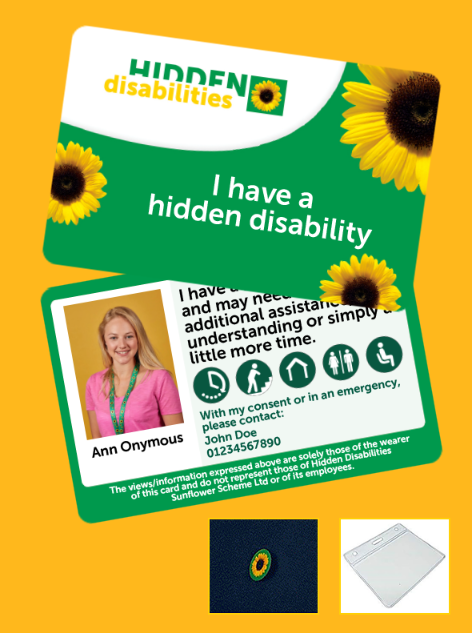
“As much as I appreciate what you’re saying, I think that a lot of it is coming from a misguided place,” said Councillor Roberts to Councillor Cooper. “This will actually benefit the municipality, and I think it’s a small cost to allow our residents to know that they can come into our city facilities and be treated with dignity and respect regardless of how they communicate.”
It should be noted that the reasoning of city staff workload, time commitments, and financial challenges weren’t solely used against the motion brought forward by Councillor Kimpson.
A project focused on the gateway fountains on Hespeler Road, brought forward by Councillor Scott Hamilton, was ultimately pulled back due to similar reasons.
“We need to look at every expenditure that we have and make sure that the money we are spending is going to benefit our community,” Kimpson said recently on the Mike Farwell Show. “That being said, perhaps there was some misunderstanding about what this program actually does.”
While Kimpson continued to push for the future of the program, she did admit that the estimated cost was a surprise to her.
“The $20,000 number that was brought forward at the meeting was new to me. I had not heard that number before. The City of Pickering has implemented the program, and they did it for about $6,500.”
Councillors ultimately agreed to pull back much of the motion, adding an amendment that would simply direct staff to look into what the hidden disability program’s implementation would look like for Cambridge and further dive into the possible impact on the city’s wallet.
Those findings and recommendations will come back to council at a later meeting.