WRPS concerned as region exceeds 235,000 km in e-scooter use
Posted Nov 5, 2025 09:58:56 AM.
Last Updated Nov 5, 2025 11:19:18 AM.
Waterloo Region has officially ridden past e-scooter season with summer in the rear-view mirror, autumn making its way by, and winter now on the horizon.
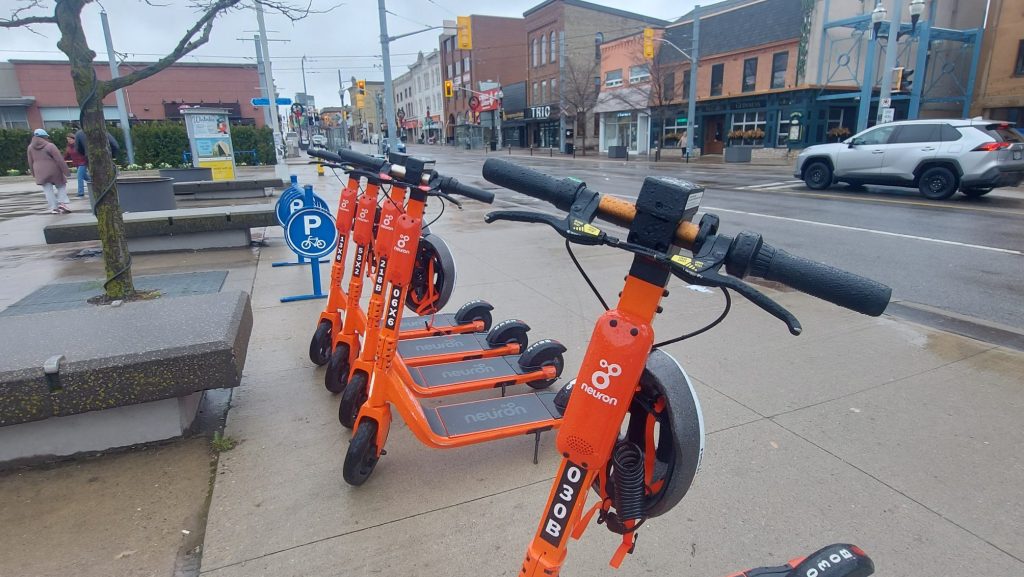
Some new figures from Neuron, the company responsible for the orange e-bikes and e-scooters throughout the region, shows just how popular they were throughout 2025.
Residents across the region travelled a combined total of over 235,000 kilometres through the year, the data shows, with one rider alone combining for over 100 kilometres of travel.
“Neuron’s e-scooters are helping people get around the Region of Waterloo quickly and sustainably, while also supporting local businesses and reducing congestion,” said Ankush Karwal, General Manager for Canada at Neuron Mobility.
He pointed to numbers detailing the economic presence of those e-scooters, with figures showing 55 per cent of total trips included a purchase in the region, averaging $25, which Neuron said injected an estimated $3.1 million into the economy.
It also detailed that 36 per cent of those total e-scooter trips replaced a possible journey by car instead, which it said cut around 13.5 tonnes of CO2 emissions.
“We’re thrilled to see such strong usage this season, and we thank our loyal riders and the transportation teams at the Region of Waterloo, the City of Kitchener, the City of Waterloo and the City of Cambridge.”
While the region has clearly been making the most of the accessible, electric mode of transport, its rise in popularity has led to some concerns from Waterloo Regional Police Service (WRPS), particularly when it comes to some people pushing those options to their limits.

Sgt. Scott Griffiths, with WRPS Traffic Services Unit, said modifications are becoming a growing issue in the region, to the point where some units are beginning to blur the lines between what’s an e-bike or e-scooter and what’s not.
“We have parties who are operating devices that sort of fall in between the cracks of those definitions, as well as people who are actively modifying those vehicles,” said Griffiths. “We have people who are actively circumventing those rules and speeding them up because they want to obviously treat it more like a motorcycle than a bicycle. We face enforcement issues when we’re dealing with these vehicles.”
He added that, not only are people modifying some of those options to operate more like motorcycles, but visually, they already bear an uncanny resemblance that creates issues for both officers and residents across Waterloo Region alike.
“We’re seeing bikes that look like motorcycles, but they’re technically e-bikes because they have pedals, and they have restrictions or they’re supposed to have restrictions as to their ability to carry speed, and the fact that they don’t require licenses or insurance.”
Staff Sgt. Scott Griffiths speaking on e-bikes, e-scooters
He said those potential risks only become heightened when factoring in those vehicles travelling on sidewalks.
Neuron said that, even with those potential concerns, its electric options remain ever popular in the region.
It has found that 9 in 10 people across Waterloo Region view those e-bikes and e-scooters favourably, when it comes to the environment, mobility, reducing congestion, and overall convenience.
With the number of riders increasing alongside the clear use being seen through the combined travel distances, the region is set to see the continued use of e-bikes and e-scooters in the years ahead.
The only question will be how they become integrated in different ways, whether it be law enforcement, local legislation, or more, looking ahead to 2026.