Carney says tougher bail, sentencing rules to be introduced next week
Posted Oct 16, 2025 11:28:12 AM.
Last Updated Oct 16, 2025 04:45:11 PM.
The federal government will introduce new legislation around bail reform aimed at keeping violent criminals and repeat offenders off the street.
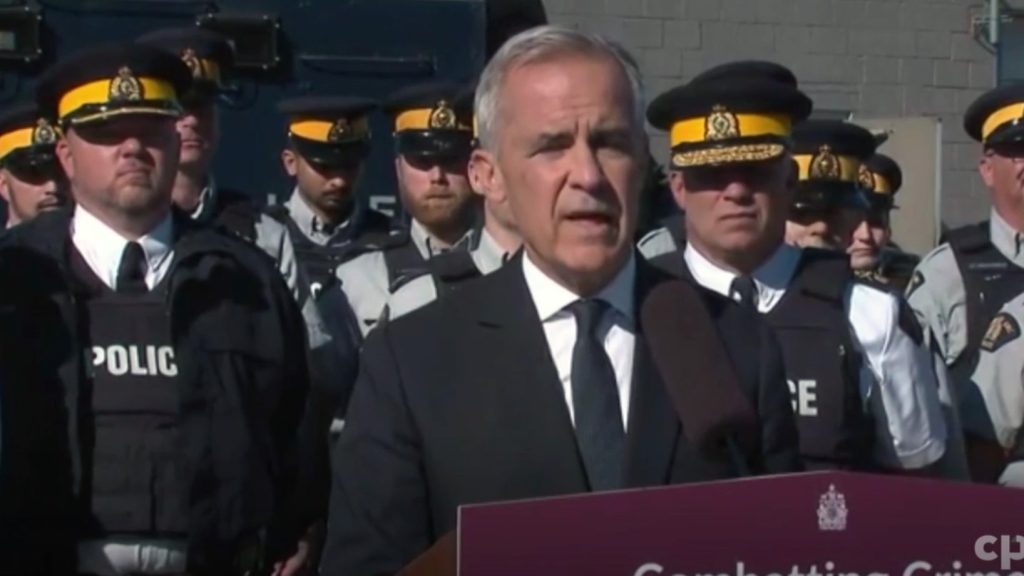
Prime Minister Mark Carney says the Minister of Justice will be tabling legislation next week that will focus on new reverse-onus bail provisions for violent and organized crime-related offences.
Carney says under the reverse-onus provision, it will no longer be up to the Crown to prove why someone should stay behind bars, it will be up to the accused to prove to the court why they can be trusted to be released.
“Right now, in most bail hearings, the starting point is to release, and the Crown must prove why someone should not be released on bail, making it too easy for repeat violent offenders to quickly get back on the street,” said Carney during an announcement in Etobicoke on Thursday. “We’re making bail stricter to keep you safer.”
He said his government intends to “toughen sentences for repeat offenders of auto theft, of organized crime, and of home invasion, so that criminals who have repeatedly victimized your community do not have the chance to do so again.”
The bill will allow for consecutive sentences for violent and repeat offenders, so that multiple sentences can’t be served at the same time. Carney said that means an offender with a seven-year sentence and a five-year sentence must serve a total of 12 years, not seven.
The Liberals also plan to introduce more punitive sentences for organized retail theft and eliminate conditional sentences for sexual assault.
The Supreme Court has ruled some consecutive sentences are unconstitutional. In 2022, it struck down a provision that allowed a judge to impose a life sentence and parole ineligibility periods of 25 years to be served consecutively, saying the provision violated the Charter of Rights and Freedoms’ guarantee against cruel and unusual treatment.
Carney said the government consulted with various stakeholders while developing the bill, including constitutional experts.
“This is a package that we expect … does what it’s supposed to do. It toughens the rules, punishes criminals, it’ll help keep us safe, but also is consistent with the Charter of Rights and Freedoms,” he said.
Justice Minister Sean Fraser told The Canadian Press the government developed the legislation based on suggestions from law enforcement and the premiers. Both of those groups have pushed for tougher bail laws.
“We started with an approach to say, unless there are very obvious constitutional concerns, let’s start with the assumption that we want to include the suggestions that come from law enforcement or provincial governments,” Fraser said in an interview.
He said the government also heard from downtown business associations and municipal governments “about the need to address high-volume offenders who commit many crimes that may not always be violent but are calling into question for many Canadians whether they feel safe going out in their communities.” He said “a lot” of those concerns would be reflected in the bill.
Fraser said it would be “irresponsible” to seek to adopt laws that would be struck down by the courts.
“Thankfully, the vast majority of the recommendations that we’ve received from law enforcement and provincial governments, I’m confident, pass constitutional muster,” he said.
When asked what his government would do if the Supreme Court of Canada shoots down the changes to sentencing, Carney said it would abide by that ruling.
“If there’s a judgment of the Supreme Court that something is illegal, you follow it. This is Canada. It’s a country of the rule of law,” he said.
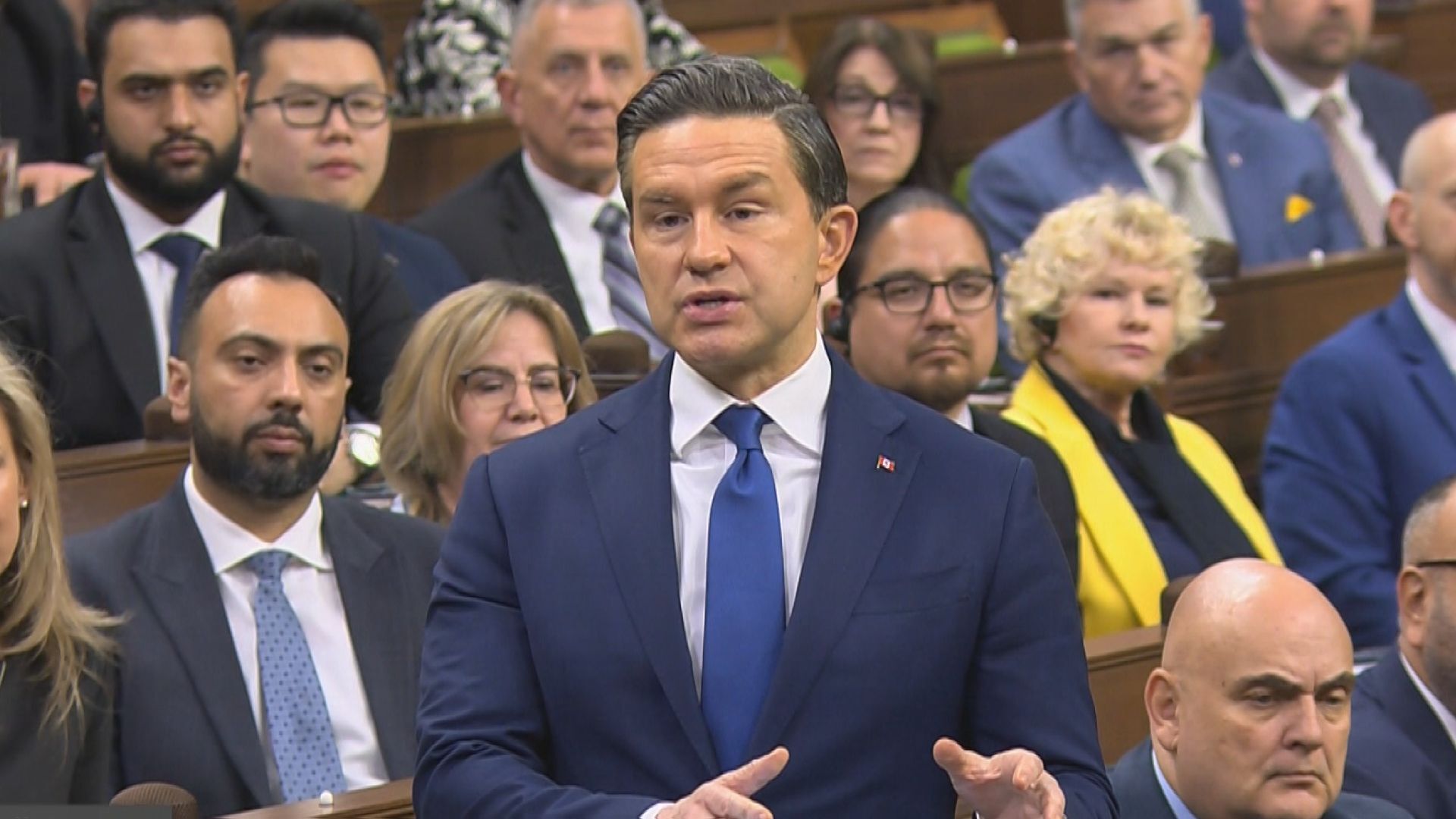
Conservative Leader Pierre Poilievre, who has consistently accused the Liberals of being lax on crime, said during this spring’s federal election he would be willing to use the Constitution’s notwithstanding clause to make his proposed crime policies law. Such a move by the federal government would be unprecedented.
Denying that the bill was a response to Conservative pressure, Fraser said it’s a “response to a clear call for a change in our laws from Canadians.”
He said he wouldn’t try to predict whether the Conservatives will support the minority Liberals by voting in favour of the bill.
“If their assessment is motivated by what will improve public safety, they will support the bill,” Fraser said. “If their motivation is seeking to have a political wedge for political reasons against the federal government, they could potentially take a different point of view.”
The Canadian Civil Liberties Association said it strongly opposes the measures outlined by Carney in the proposed bill.
“There is no evidence that bail causes crime,” said Shakir Rahim, Director of the Criminal Justice Program, noting there have been calls for years for the government to make standardized data on bail available.
“We do not even have basic numbers, like how many people allegedly commit new offences while on bail. The PM today made no indication that would change.”
But the Federation of Canadian Municipalities praised the announcement, calling it “a welcome signal that the federal government is listening to the concerns of municipalities.”
Federation president Rebecca Bligh said in a press release that bail reform is “an important step toward addressing the public safety challenges communities are facing. Local police are repeatedly arresting the same individuals, emergency services are stretched thin, and residents are feeling the impact.”
The Toronto Police Association called Carney’s statements about the new legislation a “positive step,” adding that many of the recommendations they put forth to the federal government have been included.
“However, there is still work to do, including reforming the Youth Criminal Justice Act and making changes to the parole system,” they said in a statement. “We also hope to see some federal funds allocated to the City of Toronto to address urgent public safety issues that the Prime Minister acknowledged today, such as hate crimes, gun violence, and drug trafficking.”
The legislation will also invest in frontline law enforcement by hiring 1,000 new RCMP personnel, including 150 RCMP staffers focused on financial crime, who will target money laundering networks, organized crime, online fraud and asset recovery.
“Financial crimes take many forms, and they are rising with devastating impacts on millions of Canadians. Retired Canadians who spent a lifetime saving carefully are losing thousands of dollars in seconds, sometimes just for answering a call from the wrong person,” Carney said.
The bail reform plan comes two years after the Liberals introduced other bail-reform legislation in 2023. That came after calls from provincial leaders and many police chiefs to make bail more difficult to access for repeat violent offenders.
The bill, which took effect in January 2024, made changes to bail for some firearms and weapons offences, and some circumstances in which the alleged crime involves intimate partner violence.
Files from The Canadian Press were used in this report