UW researchers using walnut shells, water to develop new electric generator
Posted Aug 27, 2025 10:04:37 AM.
Last Updated Aug 27, 2025 12:20:57 PM.
An unconventional combination is at the heart of a new, naturally sourced technological development, turning discarded walnut shells and a drop of water into electricity.
The development comes from researchers at the University of Waterloo (UW), who discovered that pouring a single drop of water onto a walnut shell can be an efficient way of transporting electrically charged ions, now looking to harness that phenomenon in a new electric generator.
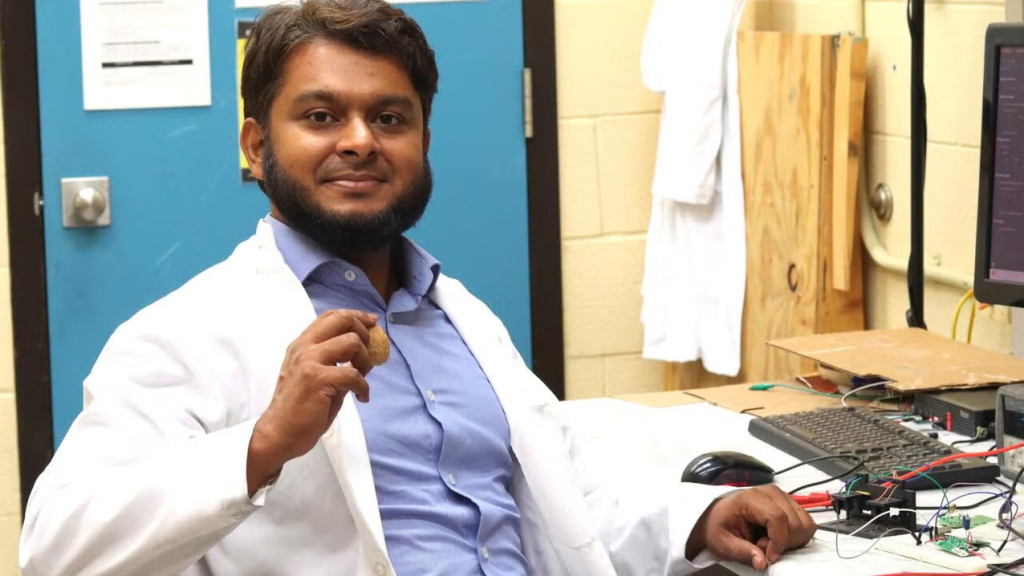
“It all happens with nothing more than a single droplet of water and the shell’s natural architecture, no crushing, soaking, or complex processing needed,” said Nazmul Hossain, a PhD student with UW in mechanical and mechatronics engineering. “It’s a simple, yet powerful example of turning waste into clean energy using nature’s own power.”
That technology, simply called a water-induced electric generator (WEG), is based on the process of evaporating water flowing through the porous internal structures found inside those shells. That process is called hydrovoltaic energy harvesting.
It all came to pass after Hossain ate a hazelnut and decided to place the shell under an electron microscope. He was able to see the complex internal structures, which naturally help it transport water and nutrients for growth.
This is the latest in multiple electrical and technological developments coming from the local university.
While it started with a hazelnut, tests were done on four different kinds of nut shells, with walnut shells deemed to have the best potential to produce power.
The WEGs simply comprise shells, water droplets, electrodes, wires, and a 3D-printed base. It ends up being roughly the same size as a coin.
“This technology could be a game-changer for powering small electronic devices, especially in remote or off-grid areas,” Hossain said. “Imagine environmental sensors monitoring forests, IoT and wearable health devices, disaster-relief equipment, all running on tiny water droplets from the air.”
The next steps involve working to develop the new technology into a wearable device capable of harvesting sweat or even rain, with the potential of powering various small devices, sensors, as well as to detect water leaks.