National housing advocate critical of Region’s encampment bylaw
Posted Jul 22, 2025 03:37:14 PM.
Last Updated Jul 22, 2025 03:37:21 PM.
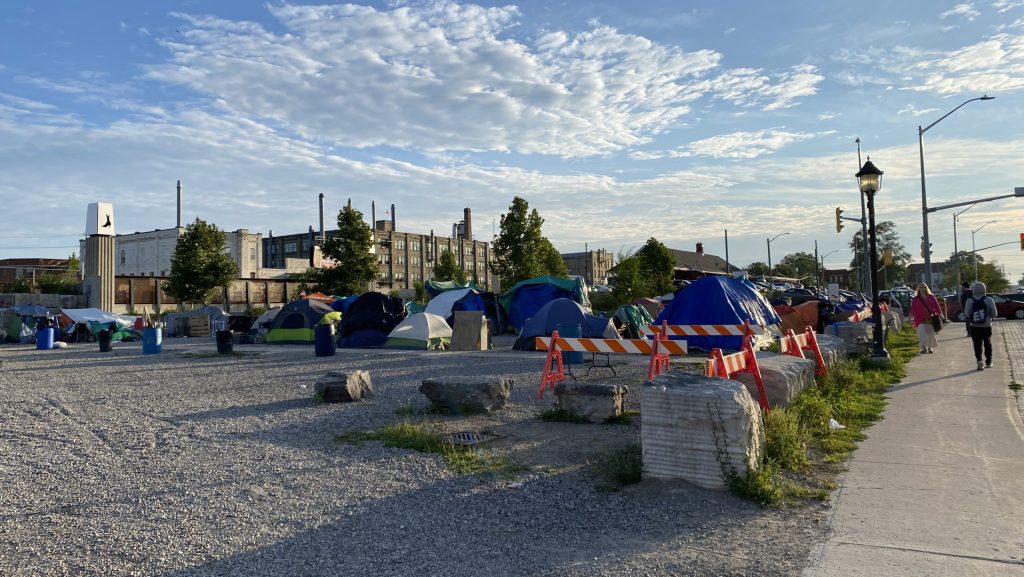
For the second time, the Region of Waterloo is being told its intention to clear the homeless encampment at 100 Victoria Street, Kitchener violates the residents’ human rights.
The Region claims to need the property as part of the construction of a new transit hub to be located nearby. The encampment location would be used to stage construction equipment.
Back in 2023, Ontario Superior Court Justice, M.J. Valente ruled that previous attempts by the Region to clear the encampment breached the residents charter rights.
In a open letter to Regional Council last week, National Housing Advocate Marie-Josée Houle expressed her concerns with Bylaw 25-021, the bylaw passed by council in April that requires the residents to vacate the property by December 1, 2025.
Houle’s main focus in the letter was the lack of meaningful consultations with the residents.
“I understand that the Region has a team dedicated to working with residents of the encampment. However, the fact that there is a pre-determined outcome (i.e., clearing out the encampment by November 30, 2025) undermines trust and the possibilities for meaningful engagement,” she said in the letter. “Consultations are a mere formality when decisions have already been made, making it clear to encampment residents that their input is not important.”
Houle reiterated the feelings expressed in her letter on The Mike Farwell Show.
“The decision has already been made and the municipality is claiming to have talked to these people and they have a team that works with them but these people have no agency over their future and they’ve never been consulted,” she said.
According to Houle, to ensure the residents rights aren’t being trampled on, they need to be consulted directly so their needs can be assessed then addressed. She said often times people choose to live in an encampment because they feel it’s a better and safer option than the shelter system. Shuffling people into shelters won’t solve the problem.
“Adequate housing is the solution. Where people can finally feel safe, finally have something to call their own and they can finally get out of ‘survival mode’ to address all of the issues that have led to them being in the encampment to begin with,” she said.
Even though Houle was highly critical of the Region’s plans, she said that the responsibility for ensuring the human rights of unhoused individuals are upheld doesn’t rest solely on their shoulders.
“I appreciate that municipalities like Region of Waterloo are on the frontlines of the homelessness crisis and responses to encampments but do not necessarily have the powers and financial resources to address all the systemic factors contributing to homelessness,” she said. “Nevertheless, municipal governments – just like all other orders of government – have obligations to respect, protect, and fulfill human rights and to adopt a human rights based approach to encampments.”
In a response to a request for comment the Region of Waterloo said it continues to support residents at the encampment.
“This includes regular supports provided by outreach staff, connections with Ontario Works Caseworkers, providing regular cleaning and maintenance of the site, hiring pest control, portable washrooms, lighting, and other health and safety interventions,” it said.
The Region said that between April 16 and July 2 it supported 13 people off the site with an approach consistent with it’s Plan to End Chronic Homelessness.
The Region says it is seeking further direction from the Superior Court of Justice on the case and has been given a hearing date of November 19 to 21, 2025.