‘Are the townships paying?’: Region debates benefits, cost of Cambridge rapid transit

Posted Sep 10, 2025 07:30:25 AM.
Last Updated Sep 10, 2025 11:40:51 AM.
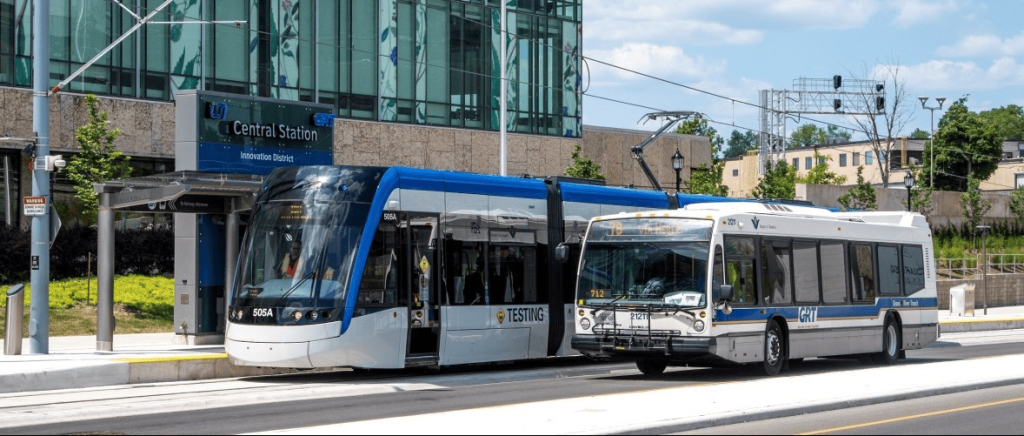
With transit talks continuing around the expansion of ION and light rail options for Cambridge, new findings have been introduced to regional council, now debating the overall benefits for townships throughout Waterloo Region.
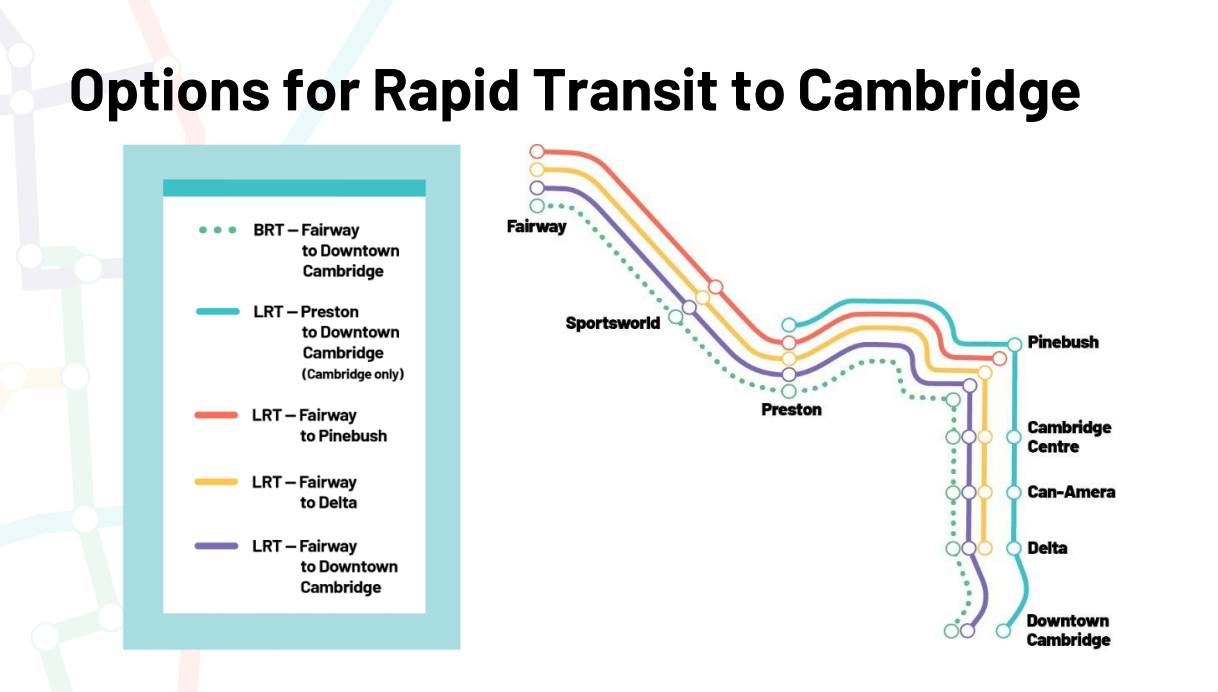
It comes after recent community, infrastructure, and economic findings were brought forward through a Stage 2 ION initial business case, looking into five potential options for what rapid transit could look like in Cambridge.
Those options included a full light rail transit (LRT) option, various partial routes, and expanded bus-based options (BRT) as well.
With each possible choice eventually leading to hefty price tags, regional councillors have begun debating what that cost will look like and who will be paying for it.
“As an economic tool that’s bringing business into the core, which is indeed where we want it and how we want to develop as a region, the townships aren’t benefiting from the taxes that are generated there. The cities are,” said Woolwich Mayor Sandy Shantz.
Various township representatives amongst regional councillors voiced their concerns, pushing that the expansion doesn’t benefit enough of the remainder of the region to justify pulling the costs from joint regional funding.
“This takes me back to the question I’ve been asking from the start: is this area rated, and are the townships paying for the ION?” asked Wilmot Mayor Natasha Salonen. “This omission through how we do our reserves and our capital funding, I’m not saying that’s wrong, but I’m saying that is now contrary to what I have been informed of throughout this whole process that the townships will not be paying for this. How are we gonna make this square round?”

Salonen mentioned that the funds being used to pay for whichever venture is chosen could otherwise be used for opportunities that would directly impact Waterloo Region, specifically the townships, including Wilmot, Wellesley, North Dumfries, and Woolwich.
Acting Commissioner of Transportation Services with the Region of Waterloo, Doug Spooner, stated that the townships have largely benefited in other areas when it comes to transit and transportation developments, along with the associated price tags that have come with them.
“I really struggle with this one because we talk a lot about area rating and how some people pay for some services and other people don’t pay. When really, if we wanted a complete picture of mobility and area rating, there’s a big conversation to be had in the area of roads versus transit versus all of the mobility services we provide,” Spooner said.
He mentioned that, while in this case the argument has come up that, not by area rating the project, a portion of the costs would be pulled from collective funds, this same measure has benefited the townships in the opposite way in the past.
“I would actually disagree that we haven’t provided that economic benefit back to the townships, and we’re actually providing more by nature of not having area rated the full mobility picture.”
The region will also be appealing to the provincial and federal governments for funding assistance for whichever project is chosen.
Newest member with regional council, Joe Gowing, said there is a potential way to find compromise in the future, by working to better connect the townships to the upcoming rapid transit developments, so they too could share in the transportation development.
Regional councillor Sue Foxton responding to comments from Sandy Shantz and Doug Spooner on Cambridge LRT and the township impact.
“If we had a rapid system to get them to the ION, that would cut down a lot,” Gowing mentioned. “I get it, 75 minutes from Waterloo to downtown Cambridge. However, from my house, I have to take a bus to get to the system, to even get to that 75 minutes.”
No decisions were set to be made during the regional meeting, simply bringing forward the business findings to councillors. Now, city staff will have a few months to go over the details, working to present a full picture and recommendations back in November.
That is when council is currently expected to make a decision on the next direction for rapid transit and ION service in Cambridge.