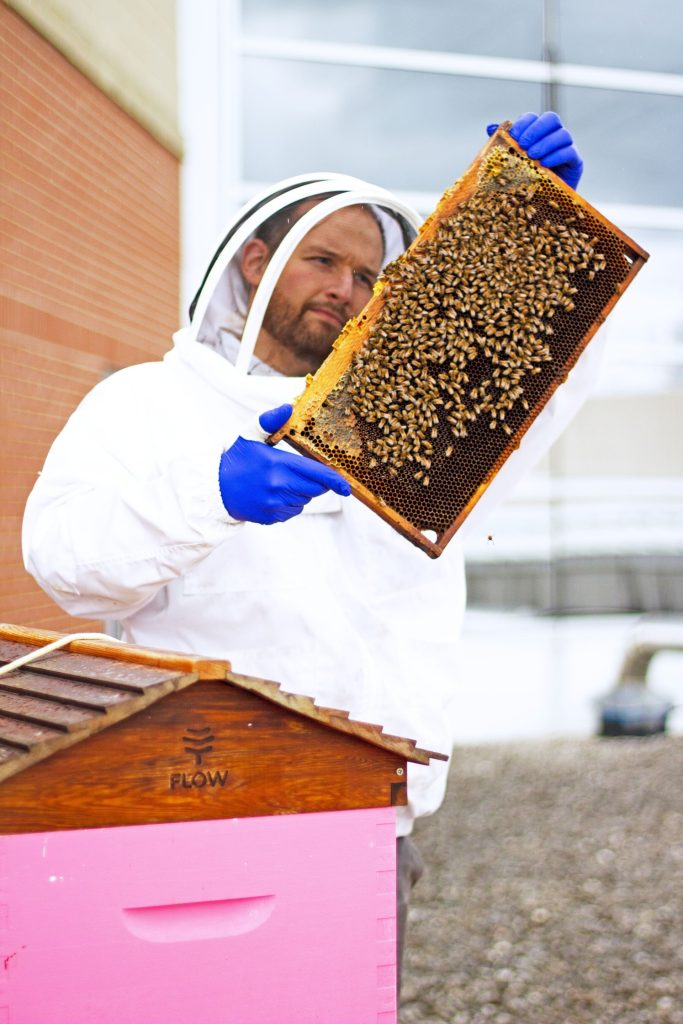
Honey bee death rates rising despite reduction in antibiotics: study

Posted Aug 12, 2025 03:15:38 PM.
Last Updated Aug 12, 2025 04:22:34 PM.
An effort to reduce antibiotic usage on honey bees in Canada appears to be having adverse effects.
A team of researchers at the University of Guelph led a recent study to assess the link between antibiotics and honey bee health.
It was the first large-scale project to examine the trend since tighter restrictions on antibiotics were introduced in 2018.
“It went from about 50 per cent usage nationwide to around 25 per cent,” said Dr. Brendan Daisley, a researcher with U of G’s College of Biological Science, who appeared on The Mike Farwell Show on Tuesday. “Alongside that antibiotic drop, we saw mortality rates increase from around 20 per cent on the national scale to 40 per cent.”
Researchers studied more than 700,000 honey bee colonies per year between 2015 and 2023.
Daisley said the new regulations were introduced by the World Health Organization and adopted in Canada to address unnecessary usage of antibiotics and rising antibiotic resistance, which makes infectious diseases more difficult to treat.
“About 70 per cent of all antibiotics used worldwide are coming from the agricultural industry — so reducing that is good,” Daisley said. “Antibiotic usage has been reduced in the beekeeping industry, but through reducing that usage, we’re seeing that the bees are being impacted more by infectious diseases.”
Daisley said there are three leading factors in bee mortality rates: infectious disease, pesticide and other exposure, and climate change.
While reducing the overuse of antibiotics is a positive thing, researchers have noticed some negative outcomes.
“The real issue is we don’t have alternatives, so you can’t really go cold turkey off antibiotics when the bees have been dependent on them for such a long period.”
While antibiotics help bees fight off infectious diseases, they also destroy the bees’ microbiome.
Daisley calls it a “catch 22” situation and said researchers are exploring potential alternatives, like probiotics, but they need funding to help carry out their work.
Read more about the study by clicking here.