EMS, Fire recruits take part in mass casualty simulation training
Posted May 19, 2023 02:45:36 PM.
Last Updated May 19, 2023 02:59:46 PM.
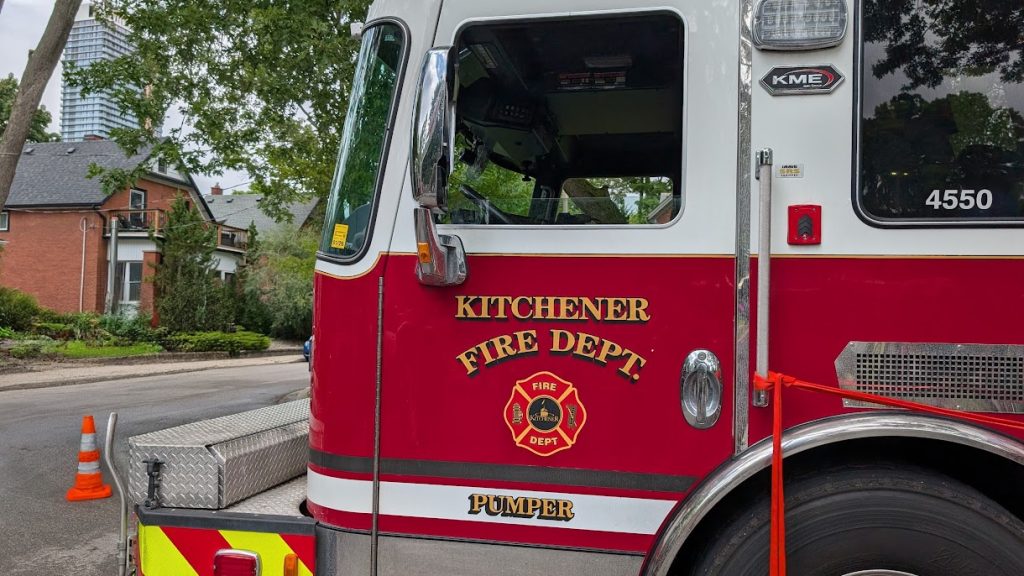
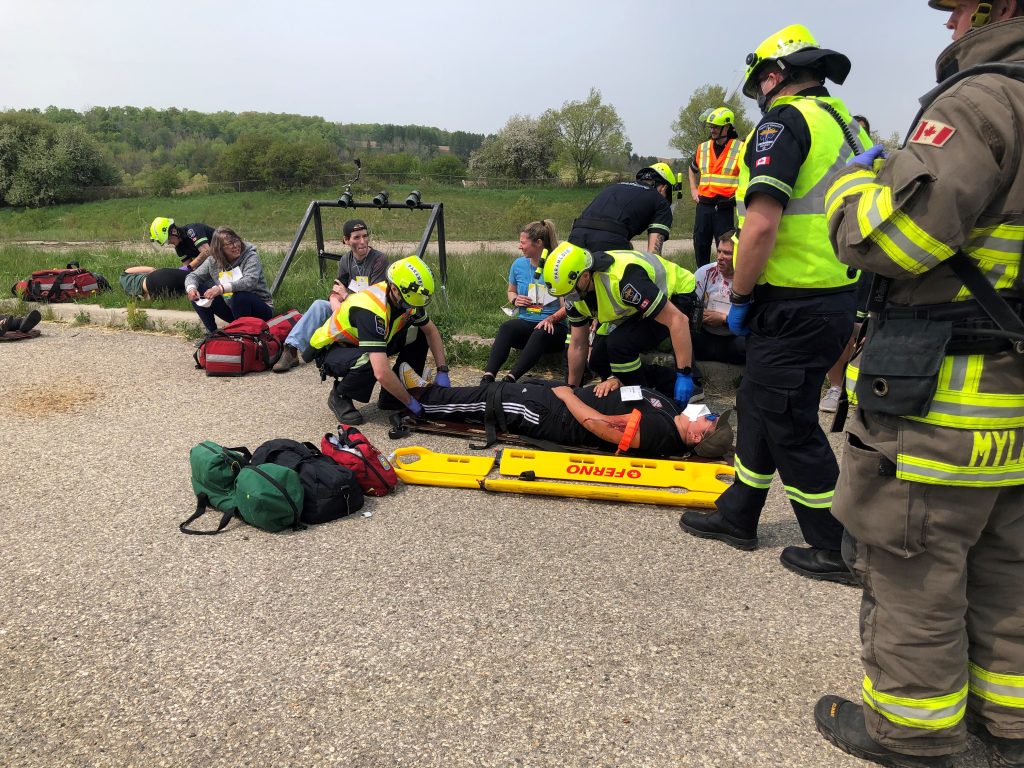
New recruits from the Kitchener Fire Department and Region of Waterloo Paramedic services responded to a simulated disaster as part of a mass casualty mock event on Friday morning.
It took place outside the Region’s Emergency Services Training and Research Centre. A simulated explosion took place with smoke machines filling the multi-level building.
“We organize this day to better prepare new paramedics and firefighters for the challenging calls. These calls require a high degree of coordination and understanding of each agency’s role,” said Culver Leclerc, Row Paramedics training specialist. “Our goal is to help them feel supported and more prepared in these types of high-pressure situations.”
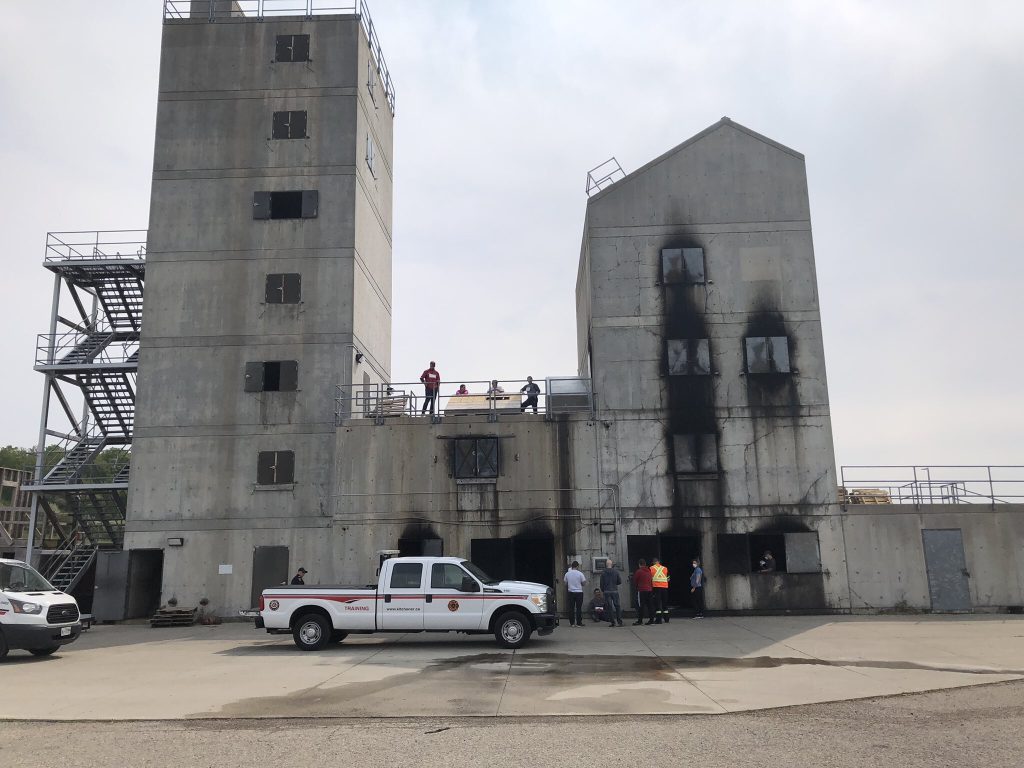
The building just before the simulation took place/Jonathan Strom City News
Around thirty volunteers were in and around the building with makeup to show their injuries. They each wore cards that stated their injury or ailment as well.
Emergency services worked to evacuate the building as well as triaging to ensure those who need assistance most get help first.
“When we respond to multi-casualty incidents, we triage them with colors. Green is more of our walking-wounded, and we go on to blue which is our severe patients,” Leclerc said. “It’s how we categorize them and we’re able to respond appropriately to give them the right treatment.”
34 new paramedics are about to join the roam, while three-quarters of the fire personnel that took part in the training have spent less than a year on the job.
“Generally, when police, fire, and EMS meet each other for the first time it’s at an emergency scene,” said Kitchener Fire Department’s Training Officer, Reid McIver. “Outside of the scenario that we ran, it gives a chance to say hello, learn about the other agency, what the differences and similarities are.”
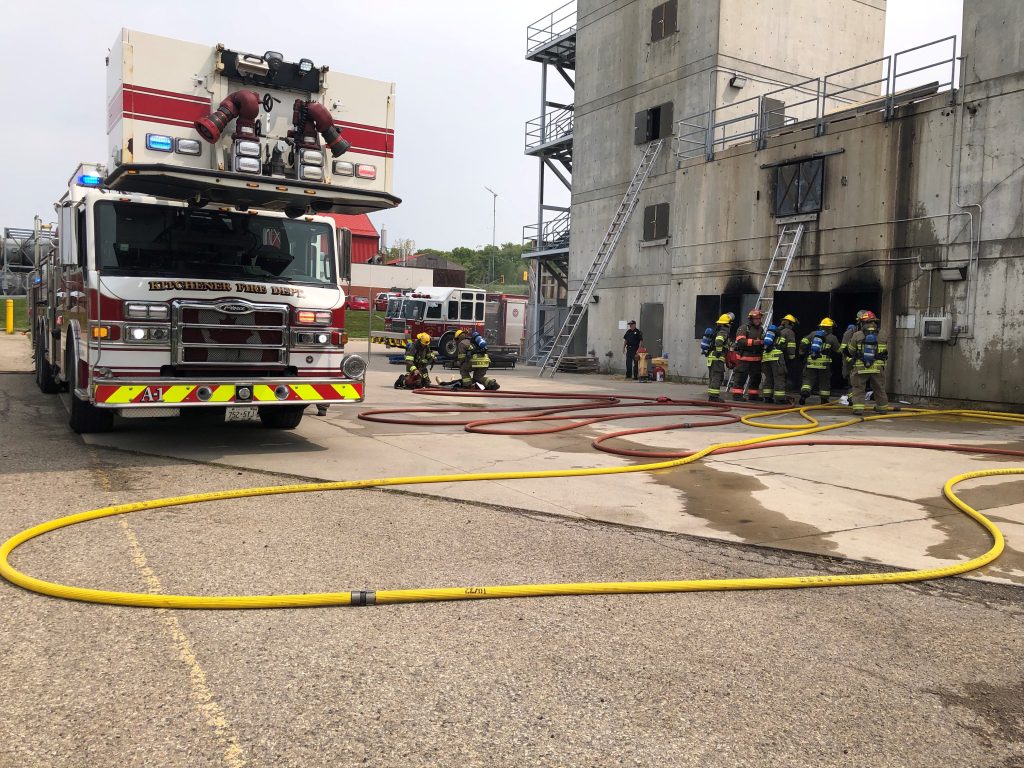
Emergency services enter the building while others attend to a volunteer / Jonathan Strom City News
Staff Sergeant Scott Griffiths with Regional Police’s Traffic Services Unit agreed with the importance of doing this type of training.
“These incidents are very dynamic, and that’s what makes training, and coordination all the more important,” he said.
The simulation lasted for about 45 minutes and Leclerc deemed it as a success afterwards.
“I think everybody did a great job. There was so much coordination between police, fire and ambulance. I’m really happy with how everything went today.”
Fire and Paramedics continue to triage and work to treat all the people that were in the building. @CityNewsKIT pic.twitter.com/3GmYEuoGM9
— Jonathan Strom (@jonathan_strom) May 19, 2023