Exploring the impacts of a Quebec AI company’s potential expansion into Waterloo Region
Posted Aug 12, 2025 07:52:21 AM.
Last Updated Aug 12, 2025 01:13:35 PM.
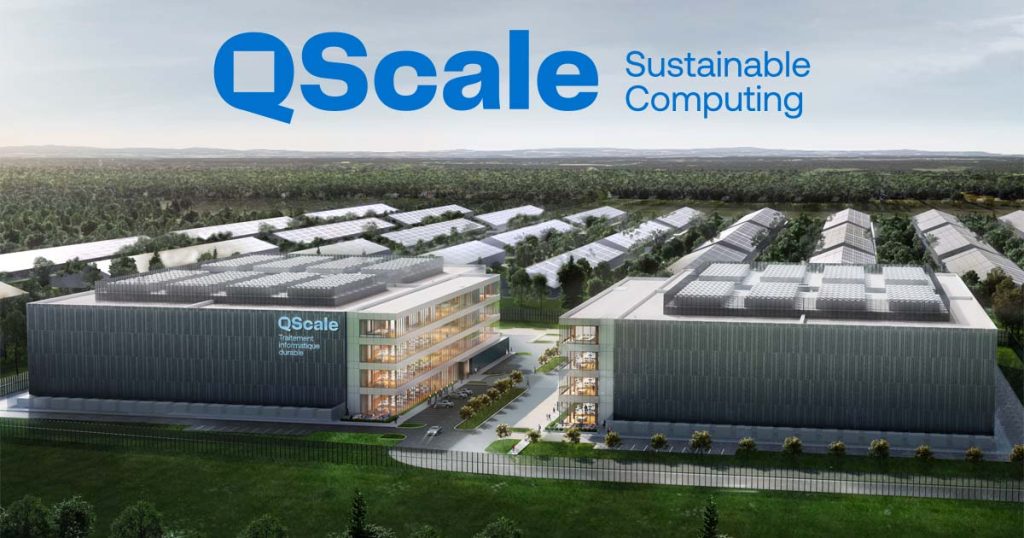
There’s been plenty of buzz around Waterloo Region since it was unveiled that QScale, a Quebec-based AI company, was considering Waterloo Region, and specifically Wilmot township, as the potential location for its expansion into Ontario.
The company has plans to build a future-ready AI data centre in this province and could invest a reported $4 billion in its expansion.
So, what could that potential expansion look like?
One important piece of information that has been shared about this development is that it won’t take place on the 770 acres of farmland being assembled by the Region of Waterloo. Tony LaMantia, the president and CEO of the Waterloo Economic Development Corporation, said in a post on X, “The QScale DC opportunity is not connected to the 770-acre megasite being assembled by the region in any way.”
“The only farmland we would consider is to build greenhouses that benefit from the free heat we produce — turning waste energy into local food production,” said QScale founder Martin Bouchard in response to LaMantia’s post on X.
According to John Straube, associate professor of engineering at the University of Waterloo, data centres are like nodes on the internet where switching occurs between different sources of information, and in the case of AI, where servers and computers process data, run algorithms, and train machine learning models.
“They are really electric power-intensive, so that means that they need to be located near places where they have a good connection to the internet backbone and where they have a reliable and significant supply of electricity,” explained Straube.
He added that, as those computers operate, they generate an enormous amount of heat. In response to that heat, data centres use large amounts of water to cool off their systems.
According to Robert McLeman, a professor of environmental studies at Wilfrid Laurier University, large data centres can use up to 20 million litres of water per day.
“Especially the newer ones that are really heavily geared towards supporting the AI-based economy, that would be a really concerning development for Waterloo Region, and particularly Wilmot Township, given just how dependent we are on groundwater in this area,” said McLeman.
In an email sent to CityNews, Bouchard said QScale is committed to water conservation and ensures its “operations have minimal impact on local water resources.”
“QScale’s design and technology do not consume water to cool our servers. We use a closed-loop water cooling system that continuously recirculates the same water, with the only requirement being the initial fill of the system,” he said.
McLeman noted that data centres are a necessary part of the infrastructure of AI technology, and that people and businesses want to use the services that they provide.
“I think we need data centres,” said Straube. “That doesn’t mean that they could be located in downtown New Hamburg, or that they need to be an environmental problem in terms of water use. I think that there are a lot of choices. I don’t think saying ‘I don’t want data centres’ is a realistic choice.”
QScale is reportedly working on a project in Levis, Que., that would use the warmth from the servers at its data centres to grow approximately 80,000 tonnes of produce per year.